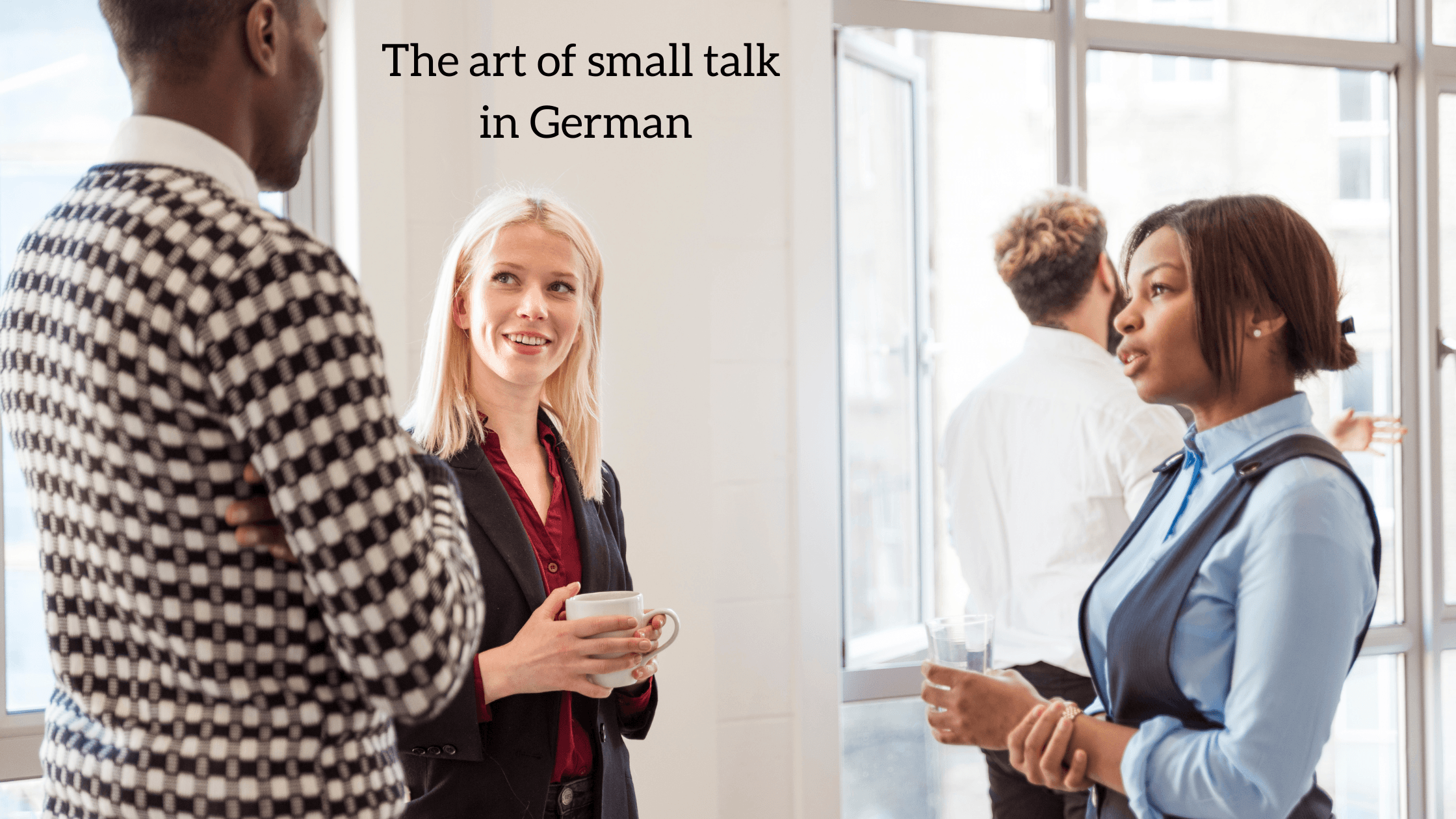

Germans in general consider superficial, polite small talk with strangers to be inefficient or insincere.
But small talk is also an essential social skill that can open doors to new relationships, professional opportunities, and personal connections. Whether at a networking event, a casual gathering, or an unexpected encounter, mastering the art of small talk in German helps break the ice and gives you a chance to practise your language skills. It involves more than just exchanging pleasantries; it’s about engaging with others in a way that makes them feel comfortable and valued. Developing this skill can boost your confidence, improve your German, and make everyday conversations much easier.
So, here are some tips for you to use if you meet a German speaker and genuinely want to get to know them better.
1. Start with a smile
A genuine smile sets a positive tone for any conversation. It signals friendliness and approachability, making others feel at ease. A warm smile can often break the ice before any words are exchanged. Try a simple greeting like “Hallo, wie geht’s?” – “Hello, how are you?” (But only ask if you genuinely want to know!)
2. Ask open-ended questions
Open-ended questions encourage more detailed responses and keep the conversation flowing. Instead of asking yes/ no questions, try simple questions like “Was machen Sie gern in Ihrer Freizeit?” – “What do you like doing in your free time?” This gives the other person an opportunity to say more and gives you something to respond to.
3. Listen actively
Show genuine interest in the other person’s responses. Nod, maintain eye
contact, and use simple German responses like “Oh, das ist interessant!” or “Das klingt gut!” Active listening demonstrates that you value their input and encourages further conversation. You don’t need to understand every word to show that you’re interested.
4. Share a bit about yourself
Balance the conversation by sharing some of your own experiences and opinions. This reciprocity helps build rapport and makes the interaction feel more natural. Be mindful not to dominate the conversation; aim for a balanced exchange. A simple sentence such as “Ich lerne gerade Deutsch.” – “I’m currently learning German” – can also be a great conversation starter.
5. Find common ground
Identify shared interests or experiences to deepen the connection. This could be anything from hobbies and work to travel, food, or recent events. Common ground provides a natural foundation for continued conversation. Try asking “Mögen Sie auch Musik?” – “Do you like music too?” Even better, if you replace “Musik” with a singer/ band/ composer. You may discover something you have in common.
6. Be mindful of body language
Your body language communicates just as much as your words. Maintain an open posture, avoid crossing your arms, and lean slightly forward to show engagement. Positive body language reinforces your verbal communication. Even when your German isn’t perfect, a friendly smile and confident body language
can make a big difference.
7. Practise empathy
Try to understand the other person’s perspective and feelings. Empathetic responses show that you care about their experiences and can foster a deeper connection. A useful German phrase is “Das klingt schwierig.” – “That sounds difficult.” Another simple response is “Das freut mich für Sie!” – “I’m happy for you!”
8. Use names
Using the person’s name during the conversation can create a more personal and engaging interaction. It shows attentiveness and helps build a stronger connection. Just be careful not to overdo it, as it should feel
natural. You could say “Schön, Sie kennenzulernen, Frau Müller.” – “Nice to meet you, Mrs Müller.”
9. End on a positive note
Conclude the conversation with a positive remark or a thank you. Express appreciation for the chat and, if appropriate, suggest a follow-up or future interaction. Leaving a good impression increases the likelihood of future engagements. Try “Es war sehr nett, mit Ihnen zu sprechen.” – “It was very nice talking to you.”
FAST-ACTION STEPS
1. Practice active listening today
If you can, engage in a conversation with someone today and focus on actively listening. Maintain eye contact, smile, and use simple German responses such as “Oh, interessant!” or “Wirklich?” to show you’re paying attention. Notice how this changes the dynamic of your interaction.
2. Prepare open-ended questions
Write down three open-ended questions you can use in your next German conversation. Questions like “Was machen Sie gern in Ihrer Freizeit?” or “Woher kommen Sie?” can help keep the conversation flowing and give you useful opportunities to practise your German.
3. Use a person’s name
In your next German conversation, make a point to use the person’s name at least once. You could say “Danke, Herr Schmidt” or “Schön, Anna!” Notice how using someone’s name makes the interaction feel more personal. Practise this technique until it feels natural.
If you’d like a reminder of those tips and see them with music, here they are again:
